Approximately 5 years ago, I started actively reducing my carbon footprint.
Just over 2 years ago I switched from working 5 days a week to 4 days a week.
These two events are connected.
Often I get asked how much money I save from the environmental changes hubby and I have made. "Just how much do you save by not having a fridge?", is the most common question. When I tell them that it is probably a hundred bucks a year I generally get a lot of "oh".
It's clear they are disappointed.
The truth is that the cumulative savings from getting rid of the fridge, the car, the dryer, and using less water is substantial enough to make all these things worthwhile financially as well as environmentally.
But the one change we have made that has saved us the most money by far, is buying less stuff. Less clothes, less electronics, less take out food, less household items. Basically we stopped buying things we didn't need.
I won't go into the environmental and social issues related to over-consumption because I couldn't hope to do a better job than Annie Leonard did in The Story of Stuff.
Suffice to say it's not good.
But even with 'the Story of Stuff', the environmental benefits from individuals buying less doesn't get a lot of airtime. We tend to think more about our utility usage (gas, electricity, wood, water) when we think of our carbon footprint. These things are easy to measure and so we can assess and compare our success. I can personally attest to how good it has felt to see our utility usage go down.
On the other hand, it's impossible to measure the environmental savings from not buying all the "stuff" we might have bought over the last 5 years. I don't know what those things are nor how or where they would have been manufactured. So I can't use a cute calculator that will tell me how many barrels of oil or trees I have saved. It's not so warm and fuzzy.
But what I do know is that buy buying less stuff meant that after only a short time we were living below our means. Way below our means. And because of that, reducing my work week by 1 day was financially easy. Almost unnoticeable.
And so life has slowed down. I'm not rushing, feeling out of breath, feeling that I'm missing out on things. This morning I took the dog for a long walk through the little urban forest near our house. I came home and had a breakfast of yogurt (homemade), granola (homemade), and local raspberries. As I type this I can hear the birds chirping outside my window. Later today I'll bike up to the library and then perhaps go swimming in the community outdoor pool at the end of my street. Life is good.
Monday, July 16, 2012


Friday, July 13, 2012
2 mornings on a lavender farm

For me though, this visit was all about lavender. Derek and Rolande of the Prince Edward County Lavender Farm were kind enough to let me come to the farm to help with their harvest and give me a crash course in essential oil making via steam distillation and all things lavender.
Last year the farm produced around 11 litres of lavender and lavadin essential oil which is sold as is and also made into soaps, lotions, body washes and creams which they sell in their store on the farm. They also have hives on site and sell pure lavender honey and have collaborated with local companies to make lavender chocolate and preserves. For the aromatologists and aromatherapists in the crowd, their lavendula angustifolia oil meets the ISO 3515 standard (the oil is sent to a university in Quebec for the gas chromotography analysis).
The lavender is harvested by hand and it is no easy job! Doing so means that the birds and rabbits that nest in the plants are minimally disturbed since the only equipment used is a hand scythe. I'm not going to lie, it was a little backbreaking. But it was so peaceful without the sounds of heavy machinery. I definitely shouldn't quit my day job - the experts Dave, Miranda and Holly harvested 2-3 rows to every 1 row I harvested! But, I enjoyed my time among those rows and rows of purple. The scent of lavender kept me energized (lavender is one of only a few balancing oils which can relax as well as invigorate) and the hum of the bees remained in my ears long after leaving.
Derek and Rolande were so kind and generous to share their knowledge with me not only of lavender and essential oil making but also on running a farm. I learned so much.
I can't recommend a visit to this farm enough. Bring a lunch and sit under the trees next to the lavender fields. Come during harvest season (late June/early July) and you can get a tour of the farm and watch the essential oil being made (call ahead to find out what time they are planning to make the oil so you don't miss it).
Saturday, June 23, 2012
The value of trees
There are a crap-load of "green" calculators on the web these days. A lot are pretty boring, or too generic/vague to provide anything of value. But this one caught my eye - The Ontario Residential Tree Benefits Estimator.
You select the type of tree, enter the diameter of the trunk, distance of the tree from the house (and some other things I am forgetting) and it spits out some really interesting stats like:


You select the type of tree, enter the diameter of the trunk, distance of the tree from the house (and some other things I am forgetting) and it spits out some really interesting stats like:
- how much CO2 the tree will sequester over it's lifetime, and
- how much stormwater is mitigated by the tree and
- replacement value of the tree


Thursday, June 21, 2012
Well that didn't last long
We turned the air conditioning on yesterday. Funny how you can go from 'meh, it's not that bad' to 'holy fire of hell it's hot in here' in half a day.
Was hoping I wouldn't need to have it on this morning but we woke up to 24C (32C with the humidex). Yuck. Just....yuck.
Looking forward to the heatwave breaking (fingers crossed will be tonight) so we can turn off the A/C and open the windows again.
I miss fresh air.
Was hoping I wouldn't need to have it on this morning but we woke up to 24C (32C with the humidex). Yuck. Just....yuck.
Looking forward to the heatwave breaking (fingers crossed will be tonight) so we can turn off the A/C and open the windows again.
I miss fresh air.
Tuesday, June 19, 2012
How we are beating the heat
We are going through a bit of a heat wave here in Ottawa (it is currently 11pm and is still very warm outside: 25C with a humidex of 35C).
We have a window A/C unit but we only turn it on when we are really desperate (a few nights every summer). We aren't feeling desperate yet so instead of A/C we/I have been doing the following to beat the heat:
- turned on the furnace fan to circulate cool air from the basement (uses the same amount of electricity as a light bulb)
- closed all the windows and curtains during the day
- have a cool shower (or better a bath) before bed
- put a damp face-cloth/flannel over my feet when I go to bed (if my feet are too hot I can't sleep!)
Monday, June 18, 2012
Rescuing food destined for the dumpster
I've been thinking a lot about food waste lately. I recently borrowed Dive! (the film) from the library (it's great), and I'm currently reading An Everlasting Meal - cooking with economy and grace by Tamar Adler (pure poetry and I want to buy a copy for everyone I know).
So inspired, I walked into my local health food store to discover that all their organic whole milk was marked down from $3.79 to $.99. The reason for the drastic price reduction was that it was due to expire in two days. Knowing what I know about expiry dates I bought all 6 litres they had on sale. The owner of the shop was happy to sell it so that she didn't have to "pour it down the drain".
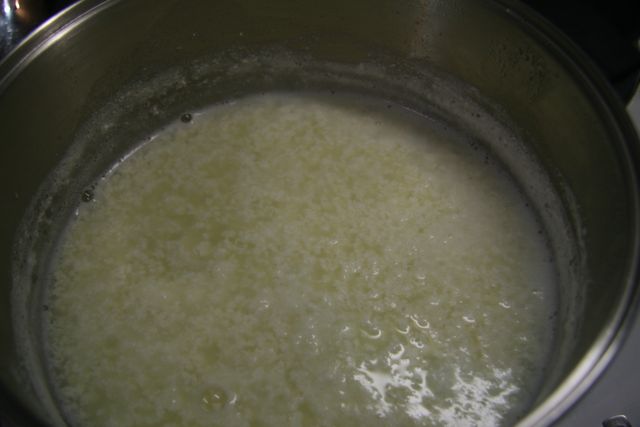
Each litre container was slightly bloated but a taste test of each revealed that the milk wasn't even starting to go off. It was absolutely fine. After turning the first litre into yogurt I decided to turn the rest into paneer. I could have also made ice cream/frozen custard but I was excited to make my first attempt at cheese.
A quick search of the internet turned up countless recipes. I picked this one, followed the recipe exactly and it worked perfectly. I worked in batches and had hoped to use the whey from the first batch to separate the curds from the whey in the second batch (instead of using lemon juice) but it didn't work. So I switched back to lemon juice.
All in all I ended up with 2.5 cups of paneer. After pressing the paneer and cutting it into cubes, there were some crumbly bits from the edges of the block which I salted and used the next day on top of a salad. Since I didn't want to eat all that paneer in the next week, I fried the 2.5 cups of cubes and froze them. I'm already craving mattar paneer.
What I realized in this is that knowing how to make food from scratch is not only economical (I ended up with 2.5 cups of organic paneer, and 1 litre of organic yogurt for $6 - as opposed to $22.74), but also makes me feel great. All the energy that was used by the cow, the farmer, and the distributor to get the milk to the store was not for nothing. And nothing ended up in the landfill (milk used, whey composted*, cartons recycled).
*I know whey makes a very healthy drink. I tried it but didn't like it. Any other suggestions for how to use whey would be much appreciated!


So inspired, I walked into my local health food store to discover that all their organic whole milk was marked down from $3.79 to $.99. The reason for the drastic price reduction was that it was due to expire in two days. Knowing what I know about expiry dates I bought all 6 litres they had on sale. The owner of the shop was happy to sell it so that she didn't have to "pour it down the drain".
Each litre container was slightly bloated but a taste test of each revealed that the milk wasn't even starting to go off. It was absolutely fine. After turning the first litre into yogurt I decided to turn the rest into paneer. I could have also made ice cream/frozen custard but I was excited to make my first attempt at cheese.
A quick search of the internet turned up countless recipes. I picked this one, followed the recipe exactly and it worked perfectly. I worked in batches and had hoped to use the whey from the first batch to separate the curds from the whey in the second batch (instead of using lemon juice) but it didn't work. So I switched back to lemon juice.
All in all I ended up with 2.5 cups of paneer. After pressing the paneer and cutting it into cubes, there were some crumbly bits from the edges of the block which I salted and used the next day on top of a salad. Since I didn't want to eat all that paneer in the next week, I fried the 2.5 cups of cubes and froze them. I'm already craving mattar paneer.
What I realized in this is that knowing how to make food from scratch is not only economical (I ended up with 2.5 cups of organic paneer, and 1 litre of organic yogurt for $6 - as opposed to $22.74), but also makes me feel great. All the energy that was used by the cow, the farmer, and the distributor to get the milk to the store was not for nothing. And nothing ended up in the landfill (milk used, whey composted*, cartons recycled).
*I know whey makes a very healthy drink. I tried it but didn't like it. Any other suggestions for how to use whey would be much appreciated!



Tuesday, July 19, 2011
Urban foraging score
Inspired by Unstuffed and her foraging finds, I have been keeping my eyes peeled in my neighbourhood.
Today I found a patch of wild black raspberries! It was a prickly, mosquito filled harvesting experience. But worth it for about a cup and a half of berries.
Initially I wasn't sure if they were black raspberries or blackberries so I asked my folks and learned that black raspberries are hollow in the middle (like a red raspberry) vs. blackberries which have a solid core.

I'm not sure what I will do with them yet. My family seems to think that they are too seedy for jam (although FoodinJars would disagree). On top of that, I didn't harvest enough fruit to make jam and despite my love for preserving food, I am trying to enjoy the fruits and veggies I harvest in season (and not preserve all of it).
So maybe I will make black raspberry lemonade (sweetened with the lemon grass syrup I made last weekend - with lemon grass from the garden).
Or maybe I will just have yogurt and granola and black raspberries for breakfast.
Today I found a patch of wild black raspberries! It was a prickly, mosquito filled harvesting experience. But worth it for about a cup and a half of berries.
Initially I wasn't sure if they were black raspberries or blackberries so I asked my folks and learned that black raspberries are hollow in the middle (like a red raspberry) vs. blackberries which have a solid core.

I'm not sure what I will do with them yet. My family seems to think that they are too seedy for jam (although FoodinJars would disagree). On top of that, I didn't harvest enough fruit to make jam and despite my love for preserving food, I am trying to enjoy the fruits and veggies I harvest in season (and not preserve all of it).
So maybe I will make black raspberry lemonade (sweetened with the lemon grass syrup I made last weekend - with lemon grass from the garden).
Or maybe I will just have yogurt and granola and black raspberries for breakfast.
Tuesday, June 28, 2011
Milkweed flowerbud capers
I came across some milkweed in various stages of flowering this weekend and vaguely remembered that you could turn something from the milkweed plant into a caper-like product. So I picked some flowerbuds just in case.
When I got home I did some research and learned that you can make 'capers' from either the flower buds (harvested when the buds are slightly loose and green) or from the seed pods (also green but larger pods that appear after the pretty purple flowers fall off).
I'm lactofermenting the flower buds using this recipe.
Here are some pics of the process so far:
Flower buds:

I discarded these. They were too close to flowering:

'capers' in their salty brine:

In a few weeks I will forage some milkweed seed pods and experiment with the recipe in Sandor Katz' book Wild Fermentation.
When I got home I did some research and learned that you can make 'capers' from either the flower buds (harvested when the buds are slightly loose and green) or from the seed pods (also green but larger pods that appear after the pretty purple flowers fall off).
I'm lactofermenting the flower buds using this recipe.
Here are some pics of the process so far:
Flower buds:

I discarded these. They were too close to flowering:

'capers' in their salty brine:

In a few weeks I will forage some milkweed seed pods and experiment with the recipe in Sandor Katz' book Wild Fermentation.
Tuesday, May 24, 2011
Green wedding rings
It's official - I am addicted to Etsy. Thanks in large part to certain bloggers who keep posting about awesome locally made upcycled clothes and furniture they've found (I'm looking at you Heartfelt!).
Today I found some beautiful wedding rings made from recycled gold and silver from the AnneHolman etsy shop. I mean come on! Are these gorgeous or what?

This made me think that I should finally write the post that I've been meaning to write forever about options for green wedding rings.
When hubby and I got married, the only place I could find making rings from recycled metal was Green Karat. But it turned out to be a good thing as we were extremely happy with the service (we got custom rings designed) and with the rings themselves. The only thing I would have changed would be to get silver rings instead of gold (we chose white gold without the coating and while less yellow than pure gold, its still yellowy and doesn't match any of my other jewelry).
Getting rings from recycled metal helps to dramatically reduce their environmental footprint. It's no secret that the majority of the mining industry is bad news from an environmental and sadly also a human rights point of view. Green Karat writes a bit about this on their site. But that is only one company's view - if you google "mining, gold, environmental", you'll get more information on mining than you ever want to read.
For a ring with an even smaller environmental footprint, how about avoiding metal altogether? If I had known about this company when I got married, I would have absolutely asked them to make our wedding rings. The company is called Touch Wood and they are based in BC. They make the most beautiful rings you have ever seen. Their rings are made from blown down or bug damaged trees on their property and also from wood from a neighbouring orchard and other scrap woods. They also use vegan glue and their website, home and shop is powered by solar power. I just love this company and their rings.
Hubby do you want to get married again so we can get these rings?

Or maybe I need this for my birthday:

Today I found some beautiful wedding rings made from recycled gold and silver from the AnneHolman etsy shop. I mean come on! Are these gorgeous or what?

This made me think that I should finally write the post that I've been meaning to write forever about options for green wedding rings.
When hubby and I got married, the only place I could find making rings from recycled metal was Green Karat. But it turned out to be a good thing as we were extremely happy with the service (we got custom rings designed) and with the rings themselves. The only thing I would have changed would be to get silver rings instead of gold (we chose white gold without the coating and while less yellow than pure gold, its still yellowy and doesn't match any of my other jewelry).
Getting rings from recycled metal helps to dramatically reduce their environmental footprint. It's no secret that the majority of the mining industry is bad news from an environmental and sadly also a human rights point of view. Green Karat writes a bit about this on their site. But that is only one company's view - if you google "mining, gold, environmental", you'll get more information on mining than you ever want to read.
For a ring with an even smaller environmental footprint, how about avoiding metal altogether? If I had known about this company when I got married, I would have absolutely asked them to make our wedding rings. The company is called Touch Wood and they are based in BC. They make the most beautiful rings you have ever seen. Their rings are made from blown down or bug damaged trees on their property and also from wood from a neighbouring orchard and other scrap woods. They also use vegan glue and their website, home and shop is powered by solar power. I just love this company and their rings.
Hubby do you want to get married again so we can get these rings?

Or maybe I need this for my birthday:

Monday, May 23, 2011
Planting
I spent a good part of the weekend filling* my new raised beds with sand and soil and then planting one of them with:
3 types of tomatoes
4 types of lettuce
3 types of bush beans
peas
carrots
beets and
radishes
This is my first year using the square foot method so I also spent some time googling this and learning how much of each type of veg can go in each square.
Fortuitously, one of the search results was The Man Who Planted Trees on you tube. It's lovely.
*with a huge amount of help from hubby, L & C.
3 types of tomatoes
4 types of lettuce
3 types of bush beans
peas
carrots
beets and
radishes
This is my first year using the square foot method so I also spent some time googling this and learning how much of each type of veg can go in each square.
Fortuitously, one of the search results was The Man Who Planted Trees on you tube. It's lovely.
*with a huge amount of help from hubby, L & C.
Subscribe to:
Posts (Atom)