Monday, August 6, 2012

My zone 5

After taking the intro to Permaculture Design in May, I decided I wanted to make room for a small zone 5 in our teeny tiny urban back yard. The great thing about creating a zone 5 is that you don't have to do anything. Just leave the space alone and let nature do her thing. After 5 months, I'm amazed at the variety of plants in this area. In addition to a few types of grasses, I have all sorts of plants (including two that I've never seen in my garden before). Here are the notable ones:

Sunberry (planted in the garden a few years ago. I don't like the taste of the berries so didn't plant again but it self seeds and it seems to attract the flea beetles so I'm happy it's stuck around):
A volunteer tomato (interestingly not a variety that I planted last year):
Some sort of buttercup? (it's flowers only open in the morning, I was a little late taking this pic):
Don't know what this is but it is lovely:

A young raspberry cane:

Common Mullein (Verbascum thapsus)

Not sure what this is next to the mullein. Seems to thrive in urban Ottawa, perhaps an invasive?:

Wednesday, July 18, 2012

Kevin Kossowan's 1 hr veg garden

Kevin Kossowan, an urban gardener/farmer, locavore and blogger from Edmonton whom I greatly admire recently began a new project he titled 'the 1 hr garden'. The goal of the project is to bust the myth that it takes a lot of time to grow your own food. The video below tells the story. Since Kevin made this video he has started selling greens from his garden (including the 1 hour garden) as part of an urban farm cooperative. And in his words "First 1hr Garden harvest = $8 sale price at market. 1/2 hr in, $16/hr and just starting. "

Not bad eh?

Monday, July 16, 2012

On buying less and working less

Approximately 5 years ago, I started actively reducing my carbon footprint.

Just over 2 years ago I switched from working 5 days a week to 4 days a week.

These two events are connected.

Often I get asked how much money I save from the environmental changes hubby and I have made. "Just how much do you save by not having a fridge?", is the most common question. When I tell them that it is probably a hundred bucks a year I generally get a lot of "oh".

It's clear they are disappointed.

The truth is that the cumulative savings from getting rid of the fridge, the car, the dryer, and using less water is substantial enough to make all these things worthwhile financially as well as environmentally.

But the one change we have made that has saved us the most money by far, is buying less stuff. Less clothes, less electronics, less take out food, less household items. Basically we stopped buying things we didn't need.

I won't go into the environmental and social issues related to over-consumption because I couldn't hope to do a better job than Annie Leonard did in The Story of Stuff.

Suffice to say it's not good.

But even with 'the Story of Stuff', the environmental benefits from individuals buying less doesn't get a lot of airtime. We tend to think more about our utility usage (gas, electricity, wood, water) when we think of our carbon footprint. These things are easy to measure and so we can assess and compare our success. I can personally attest to how good it has felt to see our utility usage go down.

On the other hand, it's impossible to measure the environmental savings from not buying all the "stuff" we might have bought over the last 5 years. I don't know what those things are nor how or where they would have been manufactured. So I can't use a cute calculator that will tell me how many barrels of oil or trees I have saved. It's not so warm and fuzzy.

But what I do know is that buy buying less stuff meant that after only a short time we were living below our means. Way below our means. And because of that, reducing my work week by 1 day was financially easy. Almost unnoticeable.

And so life has slowed down. I'm not rushing, feeling out of breath, feeling that I'm missing out on things. This morning I took the dog for a long walk through the little urban forest near our house. I came home and had a breakfast of yogurt (homemade), granola (homemade), and local raspberries. As I type this I can hear the birds chirping outside my window. Later today I'll bike up to the library and then perhaps go swimming in the community outdoor pool at the end of my street. Life is good.

Friday, July 13, 2012

2 mornings on a lavender farm

Hubby and I just got back from a whirlwind trip to Prince Edward County. Always one of our most favourite places to go, we thoroughly enjoyed ourselves. It's hard to beat evenings sitting on a deck drinking wine and gazing at the West Lake.

For me though, this visit was all about lavender. Derek and Rolande of the Prince Edward County Lavender Farm were kind enough to let me come to the farm to help with their harvest and give me a crash course in essential oil making via steam distillation and all things lavender.

Last year the farm produced around 11 litres of lavender and lavadin essential oil which is sold as is and also made into soaps, lotions, body washes and creams which they sell in their store on the farm. They also have hives on site and sell pure lavender honey and have collaborated with local companies to make lavender chocolate and preserves. For the aromatologists and aromatherapists in the crowd, their lavendula angustifolia oil meets the ISO 3515 standard (the oil is sent to a university in Quebec for the gas chromotography analysis).

The lavender is harvested by hand and it is no easy job! Doing so means that the birds and rabbits that nest in the plants are minimally disturbed since the only equipment used is a hand scythe. I'm not going to lie, it was a little backbreaking. But it was so peaceful without the sounds of heavy machinery. I definitely shouldn't quit my day job - the experts Dave, Miranda and Holly harvested 2-3 rows to every 1 row I harvested! But, I enjoyed my time among those rows and rows of purple. The scent of lavender kept me energized (lavender is one of only a few balancing oils which can relax as well as invigorate) and the hum of the bees remained in my ears long after leaving.

Derek and Rolande were so kind and generous to share their knowledge with me not only of lavender and essential oil making but also on running a farm. I learned so much.

I can't recommend a visit to this farm enough. Bring a lunch and sit under the trees next to the lavender fields. Come during harvest season (late June/early July) and you can get a tour of the farm and watch the essential oil being made (call ahead to find out what time they are planning to make the oil so you don't miss it).

Saturday, June 23, 2012

The value of trees

There are a crap-load of "green" calculators on the web these days. A lot are pretty boring, or too generic/vague to provide anything of value. But this one caught my eye - The Ontario Residential Tree Benefits Estimator.

You select the type of tree, enter the diameter of the trunk, distance of the tree from the house (and some other things I am forgetting) and it spits out some really interesting stats like:
  • how much CO2 the tree will sequester over it's lifetime, and
  • how much stormwater is mitigated by the tree and
  • replacement value of the tree
The calculator estimates that the 4 main trees in our front and back yards will, over their lifetimes, sequester 18,884 kg of CO2 and will suck up a whopping 1,861,644 litres of stormwater!

Thursday, June 21, 2012

Well that didn't last long

We turned the air conditioning on yesterday. Funny how you can go from 'meh, it's not that bad' to 'holy fire of hell it's hot in here' in half a day.

Was hoping I wouldn't need to have it on this morning but we woke up to 24C (32C with the humidex). Yuck. Just....yuck.

Looking forward to the heatwave breaking (fingers crossed will be tonight) so we can turn off the A/C and open the windows again.

I miss fresh air.

Tuesday, June 19, 2012

How we are beating the heat

We are going through a bit of a heat wave here in Ottawa (it is currently 11pm and is still very warm outside: 25C with a humidex of 35C). We have a window A/C unit but we only turn it on when we are really desperate (a few nights every summer). We aren't feeling desperate yet so instead of A/C we/I have been doing the following to beat the heat:
  • turned on the furnace fan to circulate cool air from the basement (uses the same amount of electricity as a light bulb)
  • closed all the windows and curtains during the day
  • have a cool shower (or better a bath) before bed
  • put a damp face-cloth/flannel over my feet when I go to bed (if my feet are too hot I can't sleep!)
Right now it is a comfortable 26C in the house. I'm actually a little cold!

Monday, June 18, 2012

Rescuing food destined for the dumpster

I've been thinking a lot about food waste lately. I recently borrowed Dive! (the film) from the library (it's great), and I'm currently reading An Everlasting Meal - cooking with economy and grace by Tamar Adler (pure poetry and I want to buy a copy for everyone I know).

So inspired, I walked into my local health food store to discover that all their organic whole milk was marked down from $3.79 to $.99. The reason for the drastic price reduction was that it was due to expire in two days. Knowing what I know about expiry dates I bought all 6 litres they had on sale. The owner of the shop was happy to sell it so that she didn't have to "pour it down the drain".

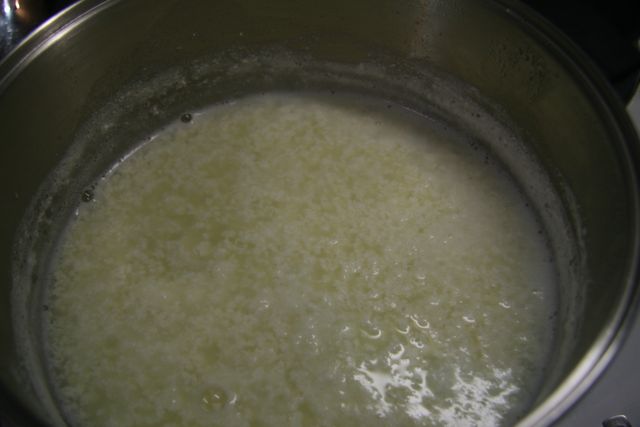
Each litre container was slightly bloated but a taste test of each revealed that the milk wasn't even starting to go off. It was absolutely fine. After turning the first litre into yogurt I decided to turn the rest into paneer. I could have also made ice cream/frozen custard but I was excited to make my first attempt at cheese.

A quick search of the internet turned up countless recipes. I picked this one, followed the recipe exactly and it worked perfectly. I worked in batches and had hoped to use the whey from the first batch to separate the curds from the whey in the second batch (instead of using lemon juice) but it didn't work. So I switched back to lemon juice.

All in all I ended up with 2.5 cups of paneer. After pressing the paneer and cutting it into cubes, there were some crumbly bits from the edges of the block which I salted and used the next day on top of a salad. Since I didn't want to eat all that paneer in the next week, I fried the 2.5 cups of cubes and froze them. I'm already craving mattar paneer.

What I realized in this is that knowing how to make food from scratch is not only economical (I ended up with 2.5 cups of organic paneer, and 1 litre of organic yogurt for $6 - as opposed to $22.74), but also makes me feel great. All the energy that was used by the cow, the farmer, and the distributor to get the milk to the store was not for nothing. And nothing ended up in the landfill (milk used, whey composted*, cartons recycled).

*I know whey makes a very healthy drink. I tried it but didn't like it. Any other suggestions for how to use whey would be much appreciated!

Tuesday, July 19, 2011

Urban foraging score

Inspired by Unstuffed and her foraging finds, I have been keeping my eyes peeled in my neighbourhood.

Today I found a patch of wild black raspberries! It was a prickly, mosquito filled harvesting experience. But worth it for about a cup and a half of berries.
Initially I wasn't sure if they were black raspberries or blackberries so I asked my folks and learned that black raspberries are hollow in the middle (like a red raspberry) vs. blackberries which have a solid core.


I'm not sure what I will do with them yet. My family seems to think that they are too seedy for jam (although FoodinJars would disagree). On top of that, I didn't harvest enough fruit to make jam and despite my love for preserving food, I am trying to enjoy the fruits and veggies I harvest in season (and not preserve all of it).

So maybe I will make black raspberry lemonade (sweetened with the lemon grass syrup I made last weekend - with lemon grass from the garden).

Or maybe I will just have yogurt and granola and black raspberries for breakfast.

Tuesday, June 28, 2011

Milkweed flowerbud capers

I came across some milkweed in various stages of flowering this weekend and vaguely remembered that you could turn something from the milkweed plant into a caper-like product. So I picked some flowerbuds just in case.

When I got home I did some research and learned that you can make 'capers' from either the flower buds (harvested when the buds are slightly loose and green) or from the seed pods (also green but larger pods that appear after the pretty purple flowers fall off).

I'm lactofermenting the flower buds using this recipe.

Here are some pics of the process so far:
Flower buds:


I discarded these. They were too close to flowering:


'capers' in their salty brine:


In a few weeks I will forage some milkweed seed pods and experiment with the recipe in Sandor Katz' book Wild Fermentation.

Tuesday, May 24, 2011

Green wedding rings

It's official - I am addicted to Etsy. Thanks in large part to certain bloggers who keep posting about awesome locally made upcycled clothes and furniture they've found (I'm looking at you Heartfelt!).

Today I found some beautiful wedding rings made from recycled gold and silver from the AnneHolman etsy shop. I mean come on! Are these gorgeous or what?

This made me think that I should finally write the post that I've been meaning to write forever about options for green wedding rings.

When hubby and I got married, the only place I could find making rings from recycled metal was Green Karat. But it turned out to be a good thing as we were extremely happy with the service (we got custom rings designed) and with the rings themselves. The only thing I would have changed would be to get silver rings instead of gold (we chose white gold without the coating and while less yellow than pure gold, its still yellowy and doesn't match any of my other jewelry).

Getting rings from recycled metal helps to dramatically reduce their environmental footprint. It's no secret that the majority of the mining industry is bad news from an environmental and sadly also a human rights point of view. Green Karat writes a bit about this on their site. But that is only one company's view - if you google "mining, gold, environmental", you'll get more information on mining than you ever want to read.

For a ring with an even smaller environmental footprint, how about avoiding metal altogether? If I had known about this company when I got married, I would have absolutely asked them to make our wedding rings. The company is called Touch Wood and they are based in BC. They make the most beautiful rings you have ever seen. Their rings are made from blown down or bug damaged trees on their property and also from wood from a neighbouring orchard and other scrap woods. They also use vegan glue and their website, home and shop is powered by solar power. I just love this company and their rings.
Hubby do you want to get married again so we can get these rings?

Or maybe I need this for my birthday:

Monday, May 23, 2011

Planting

I spent a good part of the weekend filling* my new raised beds with sand and soil and then planting one of them with:
3 types of tomatoes
4 types of lettuce
3 types of bush beans
peas
carrots
beets and
radishes

This is my first year using the square foot method so I also spent some time googling this and learning how much of each type of veg can go in each square.

Fortuitously, one of the search results was The Man Who Planted Trees on you tube. It's lovely.


*with a huge amount of help from hubby, L & C.

Monday, April 18, 2011

Why I use less water when it rains

I slacked off a little on my water conservation efforts this winter. I tried to keep taking navy showers but some days it was just too chilly and I wanted to leave the water on. It was my little luxury in a house where the thermostat is set to "cold enough you need to wear a toque".

But now that it has warmed up I'm trying to get back into the habit. I'm making a special effort to reduce my water usage when rain is in the forecast. That's because by reducing my water use on those days, I can help to reduce the amount of raw sewage that is dumped into the Ottawa river.

How's that you say?

Well the short answer is that a lot of the sewage pipes in Ottawa are combined sewer pipes. These pipes carry both the waste water from residential homes (from toilets, washing machines, kitchen sinks etc.) as well as the run off water from the street. And according to the City of Ottawa website:

"In the City of Ottawa, the large interceptor sewers can’t handle all of the storm water runoff that enters the sewer system during wet weather. Most of the wastewater is transported to the treatment plants, but to prevent basement flooding and sewer back-ups some of the rain and wastewater mixture is allowed to overflow to the river."

A lot of sewage has been dumped into the Ottawa river in the last 6 weeks. 212,503 cubic metres to be exact. And almost all of it has been on days where we've had a heavy rainfall.


The city is working on the problem and has a 17 project strong Ottawa River Action Plan. They are also maintaining an on-line list of every sewage overflow event including the date, the amount of sewage released into the river and the reason (97% of the 68 events in the last year have been due to rain). They even have an RSS feed set up on this list so that you can be notified every time an event happens.

However, 212,503 cubic metres is a shitload of, well, shit. And its making a mess of our river and our beaches.

But the cool thing is, we don't have to wait for the city to complete the projects on the action plan.

Some things all of us can do to prevent this sewage overflow are:

  • take navy showers

  • use low flush toilets

  • "let it mellow "

  • use shower water to flush the toilet

  • do laundry on a day when it isn't raining (bonus - get to hang it outside to dry!)

  • don't leave the tap running when doing dishes or brushing your teeth

  • defrost meat in the fridge (or cooler!) rather than under running water

Any other suggestions?

For more on this, check out the Ottawa Riverkeeper blog post from March 31, 2011 - "Out of control: Sewage continues to spill into the Ottawa River " if you want to learn more.

Monday, January 31, 2011

Recycling electronics in Ottawa

First of all - wow, it had been so long since I last blogged that I forgot my username. Took about 10 mins trying various combinations to remember it!

Basically, I blame the puppy - who knew they were so much work?! ;-) Speaking of Henry, thanks to all the folks who left comments on my last blog post. We are going to install an in-ground dog waste composter in the spring. Turns out they have to be something like 15 feet from any food crops. I have no spot that is 15 feet from food crops in the back yard! So it will have to go in the front. Although we are pretty sure where all the lines are (gas, water etc.), we will be sure to get the city to mark everything before we start digging!

Ok, so, recycling electronics. We all know that putting waste electronics in the garbage is a really bad idea. Once in landfills they leak all sorts of nasties like heavy metals into the water table and surrounding ground. But it is also important to make sure that when recycling electronics, the company is reputable and does not ship waste electronics overseas (making our garbage someone else's problem - namely children who sort and take it apart under dangerous conditions).

What does this mean for you? Well basically it means you will have to pay to recycle your electronics.

The good news is that the cost is very small. AND if you live in some provinces in Canada, some of your electronic waste is recycled for free. Participating provinces include: Ontario, British Columbia, Alberta, Nova Scotia and PEI. I know that in Ontario, you can recycle: computers, monitors, tvs, and dvd players all for free. Here is a full list of the electronic waste that can be recycled for free in Ontario.

There are lots of recycling companies that are part of the Ontario program but the only place I take my electronic waste is Computer Recyclers Ottawa. I just love this company. Not only are the folks there some of the friendliest you'll meet, but they insist on complete reclamation here in North America. They never ship electronic waste overseas or to landfills.

Also, they take EVERYTHING. As an example, here are the things I took there this weekend:

  • 2 old computer towers

  • 1 monitor

  • 1 broken mouse

  • 1 teddy bear with electronics in it - you can record your voice and then have it "talk". The roommates and I used to record it saying various obscenities ;-)

  • a number of old RW cds and software

  • a broken lamp

  • broken headphones

  • a broken toaster oven

  • a broken dvd player

  • + more I'm forgetting


Not only did they take all that, they also took all the packaging and ensured me that it would be properly recycled.

The best part? With the computer stuff and dvd player being recycled for free, the total cost to recycle all my electronics was $6.75.

Small price to pay I think.

**Note: I should have mentioned that just because a lot of electronic waste is recycled for free in Ontario, this does not mean that it is included as part of garbage collection. Do not put this stuff on the curb. You have to take it to one of the affiliated recycling centres around town. As I mentioned above, I use Computer Recyclers Ottawa.

Saturday, October 30, 2010

Oh crap

Well the big news around our house lately is that we got a puppy. His name is Henry and he's part cuteness and part monster. But we love him always even when we are wondering if there is such a thing as catnip for dogs and if so, why did they stuff our couch with it?? And why didn't the SPCA tell us he has this addiction?

Getting a puppy has had many unexpected consequences.... One of these is that hubby and I are now having a lot of conversations about poop.

Did he go? Where? How many times? Even... consistency? 1 week ago I would have found this utterly disgusting. How quickly things change!

On top of analysing his poop, we also needed to figure out how to dispose of it. Obviously I was not keen on putting it in plastic bags. Here in Ottawa we have a city wide composting program called the Green Bin Program. So the first thing I did was look through the printed green bin literature. I was very happy to see that animal waste was allowed. Yippee! So for the last week I've been picking his poop up with newspaper and putting it in the green bin. (full disclosure - he hasn't had all his shots yet so he doesn't leave our backyard).

For some reason in my sleepy stupor this morning (pre-puppy I rarely saw 8am on a Saturday now I'm up at 6am!), I decided to quickly double check the green bin web site to make sure the rules hadn't changed.

And sure enough they have.

Now dog waste is specifically mentioned as a 'do not put in the green bin' item.

So what should I do? Any suggestions from green dog owners out there?

In fact, any suggestions in general on how to green up dog ownership would be much appreciated! I'm thinking: food, toys, treats etc?

Henry and I say thank you. :)

Monday, October 11, 2010

Woman's Day, 1952

I was going through a box of my grandad's things at my parents' house on the weekend and found a copy of a Woman's Day magazine from 1952. We'd kept it all these years because in it are the plans for the wooden farm that my grandad built for my dad and my aunt when they were little. This farm is amazing and includes a barn, a water tower, animals and more. I'll be posting the full instructions soon, but in the meantime below are some of the canning recipes that were also in the magazine.

I find old canning recipes really interesting from a historical point of view. I'm fascinated with what people used to eat and especially what they used to can.

Generally it's not a great idea to use old canning recipes because what was considered safe in the 50s is not what is considered safe now.

But I might try some of these. The fruit ones look like they would be fine but I will make sure to compare any recipe I try with some similar recipes written recently (for example Food in Jars recently posted a similar recipe for watermelon jelly). And I will definitely, absolutely water bath can anything I make. If you are thinking of trying any of the recipes I'd encourage you to do the same. Using old canning recipes is definitely something that falls into the 'at your own risk' category.

I was going to crop out the advertisements on the pages but they were just too good. I love the 'waste not, want not' message in the Kerr ad above right. We don't see that much anymore huh? And I thought the refrigerator ad was a great example of the 'resist anything old fashioned' propaganda that was so ubiquitous at the time.

But my absolute favourite is the lipton tea comic strip ad. Is it me or is there some subliminal messaging right around panel 4? I call d.i.r.t.y.

Monday, October 4, 2010

Damson gin or vodka

One of my favourite things to do with damson plums is make damson vodka or damson gin. It's easy to make, is delicious and makes a great gift!


You'll need:
  • damson plums. For one jar you only need a half litre of plums.

  • approx. 250ml of sugar

  • approx. 750ml gin or vodka

  • one litre glass jar


Steps:
1. Fill a jar half full to 2/3 full with damson plums. Prick each plum with something sharp before adding to the jar. This helps release the juices. Alternatively you can freeze the plums first. I use frozen plums. It's way easier.
2. Add sugar so that it fills approx. a quarter of the jar

3. Fill jars to the top with vodka or gin. Screw on lid.

4. Shake jars once a day until the sugar dissolves. Store in a dark place for 3 months. Remove the plums. Enjoy!

The vodka/gin will keep for at least a year. It does not need to be refrigerated.

The alcohol steeped plums can be eaten - they make a nice boozy addition to a cheese board.

The vodka/gin can be enjoyed straight up, over ice, or in a mixed drink (with mineral water and a twist of lime is nice).

Thursday, September 30, 2010

One week to save Ottawa's Beaver Pond old growth forest

I received an email in my inbox today about the short amount of time left to save this wonderful forest. I've tweeted about Beaver Pond forest before but I don't think I've ever blogged about it.

In short, it is something that we need to protect. It's unique. We are priviledged to have such biodiversity here in Ottawa. We shouldn't be bulldozing it.

Below is the text from the email I received. It describes the situation better than I could. Please write or call your councillor and ask them to vote to expropriate the Beaver Pond Forest. An election is coming up. This is a chance to be heard.

I've just emailed my councillor. Will you?

----

On October 6, Ottawa City Council will vote on whether to save Ottawa’s Beaver Pond Forest from development. Amazingly, the unparalleled value of this City forest, believed to be one of the most biodiverse regions in Canada, is not in dispute. Ottawa is the only major city in the world to have an old-growth forest with so many different plants and animals within an urban area—not even Vancouver’s Stanley Park or NY’s Central Park can compare. It is the only expression of the Canadian Shield in urban Ottawa, one of only four Areas of Natural and Scientific Interest in all of Ontario (another is Algonquin Park), and home to over 675 species, including many at risk. Recent discoveries show it may also be the oldest site of a Stone Age human civilization in Ontario. Calls to save this forest have come from the David Suzuki Foundation, Sierra Club of Canada, Canadian Parks and Wilderness, Green Party of Canada, a dozen Ottawa-based organizations, and many others, including a 5,000-member grassroots Facebook group.

But it appears that developers, alone, get to make the decision to wipe this old-growth forest and its endangered species off the map, even though their decision will have profound environmental consequences for us all. Even though there are far more suitable places to build, the area’s protected status overturned in 1981, and we are expected to abide by this “development at all costs” decision in today’s global-warming world. At the same time, the 40% Agreement allows a privately owned, $22,500-annual membership golf course to be “protected” from development, while the old-growth forest with endangered species is put on the chopping block to be clear-cut and paved over for developers’ profits.

It’s time for people like you and me to take back our right to have a voice in environmental decisions that affect us. The environment is too important to have these decisions made only by developers who are driven by profits, and those politicians who always vote in favour of more and more development, no matter what the costs. Last year the City had over 115 infrastructure development projects, and not one was a green infrastructure project. We need to tell all Councillors and Mayor Larry O’Brien that the people of Ottawa want a say in this environmental decision, and that this forest must be preserved. The City currently has a surplus of unspent money for infrastructure projects—more than enough to cover the $14-$22 million expropriation fee compared to the $192 million being spent on Lansdowne Park.

City Council will vote on this motion to save the Beaver Pond Forest on Oct. 6. To politicians, silence = compliance, so please contact your Councillor and ask them to support the motion TODAY.

And if you can, please FORWARD this message to five people you know

who are also tired of being “the silenced majority”.

Once the forest is gone, it’s gone forever. Taking a minute of your time now will help us get our voices back—and allow us to save something very precious for future generations as well. Please send the following email to your City Councillor with a cc to the Mayor at larry.obrien@ottawa.ca. Feel free to add your own comments too. Addresses for all Councillors: http://www.ottawa.ca/city_hall/mayor_council/councillors/index_en.html

Dear Councillor,

I live in your ward and I urge you to expropriate Ottawa’s Beaver Pond Forest. How you vote on this will influence who I vote for in the upcoming election.

- Expropriation is the right thing to do and the only way this City can correct the mistake made by the RMOC when it allowed the area to be included in the Campeau development plans back in the 1980s. Every politician of that day now recognizes that it was a mistake and, given what we know now, would never have allowed it to happen had they known more facts.

- The cost of expropriation is reasonable. The assessed value on the land is less than $55 K /acre. Staff valuation will certainly be generous and fair to the landowner.

- The funds for expropriation are available. The City currently has a surplus of $31 M in unspent infrastructure funds. I’m tired of seeing my tax dollars being used to support only non-green development projects. Last year the City had over 115 infrastructure development projects and no green infrastructure at all.

- The electorate is increasingly attuned to green issues as a result of climate change, oil spills, soaring energy costs, etc. A survey of Ottawa residents by the NCC found that Ottawa residents overwhelmingly place a high value on green space and want it expanded.

- Protecting the Beaver Pond and the South March Highlands creates immense value for the City that, properly managed, can be used to attract tourism. No other city in the world has an old-growth forest teeming with species-at-risk and other wildlife, stone-age archaeological sites, ancient vortexes/energy sites, and unique geological features that showcase how the Ice Age transformed Canada.

- The City may be able to make some money on the transaction if the NCC moves to expand the Greenbelt in 2 – 3 years and buys it from the City, since land values are likely to appreciate.

Therefore, I ask that you vote FOR Marianne Wilkinson and Clive Doucet’s motion to expropriate the Beaver Pond Forest in the South March Highlands of Kanata.

Sincerely,


Thursday, September 16, 2010

What's a Really Really Free Market?

A really really free market is basically like a yard sale crossed with a farmers market.

Except that everything is free.

No really.

Free.

I'm so excited that this this weekend marks Ottawa's first really really free market!

It's being organized by fullcircles ottawa.

Here are the deets:
Date: Saturday Sept. 18, 2010
Time: 10:00-14:00 (drop off of items starts at 8:30)
Location: 236 Levis Avenue, 1 block south of Montreal Road via Olmstead or Begin Streets

There isn't a ton of info about this event on line but I got the below from fullcircles earlier last week.

Update to Members: Full Circles Ottawa is sponsoring Ottawa's first Really Really Free Market and we are counting down the days to the event on Saturday, September 18th from 8am - 4pm. The market opens to the public at 10 am but drop off starts at 8:30.

The location has not changed but the venue has and we are moving to the lot across from Assumption School and will be using the lot at the school for parking. We are now visable from Montreal Road and should attract visitors who are not aware of the event. We are also tied into Community Events on that weekend and have been placed on the schedule.

If you can donate any time on Saturday September 18th the FCO would be very indebted to you.

A certified OES eWaste collector will be on hand and will be accepting drop offs from 8:30 am.

The event is outdoors and we are a go regardless of weather. We have the support of the Ottawa Catholic School Board, Vanier Community Service Center, The Ottawa Food Bank and the Vanier Business Assocation.

Tables and tent tops are being loaned to us by the Vanier CSC and Vanier Business Association. So FCO volunteers will be sheltered regardless of weather.

I am expecting every dealer and re-seller in the city to show up earlier than we are ready and so I need a volunteer to work the entrance with me and I need 3 more to unload boxes and put items in the appropriate areas.

We also will be hosting a bevy of green and free vendors who are coming to us from outside the group.

For more info: 613-322-5372 shelbycooper13 (at) yahoo.com